
Is Knob and Tube Wiring Safe in Homes?
Many homeowners feel unsure when they discover old wiring in their walls. Older systems can create confusion, and people often wonder if their homes are safe. This concern grows even more when they learn their house may still have knob and tube wiring.
Older wiring was common in homes built decades ago, but today it struggles to support modern electrical needs. As a result, many homeowners face questions about safety, hidden risks, and the best way to protect their property. These concerns can feel overwhelming without clear information.
In this blog, you will learn how this wiring works, why it can be risky, and which signs show a possible problem. You will also see how electricians inspect older systems and when upgrades make sense. By the end, you will know how to keep your home safer and avoid electrical hazards.
What Is Knob and Tube Wiring?
Knob and tube wiring is an older electrical system found in many homes built before the 1950s. It uses porcelain knobs to guide wires and tubes to protect them as they pass through walls. Many houses still have this wiring hidden behind surfaces, especially in attics and basements. The system worked well when it was installed, but it was designed for a time with lower electrical use.
As time passed, homes expanded and power needs increased. This older wiring often struggles to handle the demand from modern appliances, heating systems, and electronics. Because of this gap, many homeowners start to feel unsure about safety. They worry about heat, overloading, and hidden wear.
The design of knob and tube wiring also means there is no grounding. Grounding helps reduce shock risks and supports modern safety standards. Without it, the system becomes more fragile as it ages and faces wear from time, pests, and moisture.
If you want a clear review of older wiring, you can schedule an electrical inspections service for expert guidance.
Signs Your Home’s Knob and Tube Wiring May Be Unsafe
Many older homes still have knob and tube wiring tucked behind walls and ceilings. As this system ages, it can show small clues that point toward possible trouble. These clues can be easy to miss, but they help homeowners understand when a deeper inspection is needed. When you watch for these signs, you protect your home from hidden hazards.
Visible Damage Around Outlets or Switches
- Dark marks near outlets
- Warm or buzzing switch plates
- Loose outlets or cracking covers
- Sparks when plugging in devices
Frequent Electrical Problems
- Lights that flicker often
- Breakers that trip without a clear cause
- Outlets that stop working on and off
- Circuits that fail under light use
Signs of Overheating
- Burning smell near the walls
- Warm spots on ceilings
- Hot cords when using small devices
- Light bulbs that burn out quickly
Signs of Old or Worn Wiring
- Brittle wire coating
- Cloth insulation that crumbles
- Exposed wires in the attic or basement
- Loose wires hanging from old porcelain knobs
When a home shows these signs, it may mean the wiring is under stress. This stress grows when older systems carry loads they were never built to handle. Because knob and tube wiring lacks grounding, even small problems can grow into bigger risks.
If you notice any of these concerns, consider a safe upgrade through outlet installation services to protect your home.
How Electricians Inspect Knob and Tube Wiring
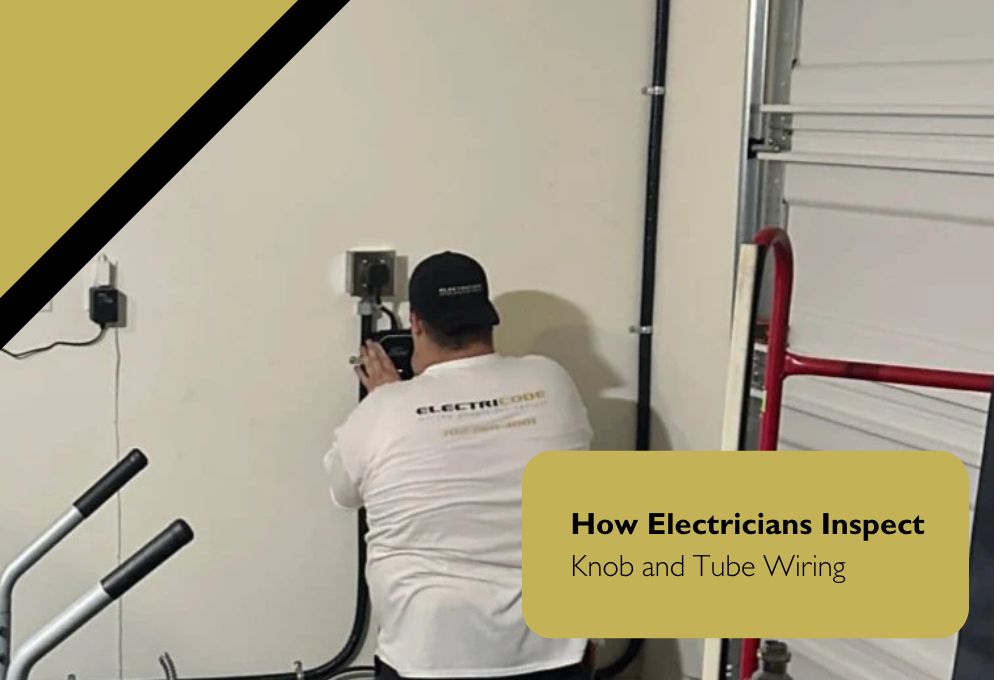
Electricians follow a careful process when they inspect knob and tube wiring in older homes. Their goal is to find aging parts, unsafe areas, and any signs of heavy strain. This type of inspection helps homeowners understand the current condition of their system and plan the right steps for safety.
- Checking exposed wires in attics and basements
- Looking for brittle insulation or loose connections
- Testing circuits for load issues
- Reviewing outdated fuse boxes and weak points
- Examining signs of heat or moisture damage
During this inspection, electricians also check how the wiring handles modern power needs. Older systems often fail when faced with today’s appliances. Because of this gap, the inspection helps identify which areas demand urgent care or upgrades.
A detailed review ensures you understand risks early. It also gives you a clear plan to improve safety without guesswork. For help improving older systems, you can explore indoor and outdoor lighting services to support safer wiring.
The inspection process gives homeowners simple steps to maintain a safe home and avoid hidden hazards.
Repair or Replace? What Homeowners Should Consider
Homeowners with knob and tube wiring often wonder if repair is enough or if full replacement is safer. The answer depends on the age of the system, the condition of the wires, and how the home is used today. Older wiring was never built for modern power needs, so even simple daily use can create strain.
Some homes may work with careful repairs. Electricians can fix loose connections, replace damaged sections, and improve weak points. These steps help reduce small risks, but they do not change the limits of the old system. Repairs work best when the wiring is still in fair shape and carries a light load.
Full replacement becomes the better choice when the system shows signs of stress. Heavy use, worn insulation, and repeated issues suggest the wiring can no longer handle the home’s needs. Upgrading to modern wiring improves safety and supports stronger appliances, heating, and lighting.
If you want a safer setup and stronger protection for your home, you can explore surge protection services to support your upgrade plan.
How Electricode Helps You Make Your Home Safer
Knob and tube wiring can create real risks when it ages or faces heavy use. Our team understands how older systems work and how they react to modern electrical needs. We review your home with care, explain each finding in simple terms, and help you choose the safest plan for long-term protection.
If you want clear answers and safe upgrades, you can contact Electricode today to schedule a visit with our licensed electricians.